Unleash Creativity with Mixed Media Collage Papers Backgrounds
The Texture Behind the Trend
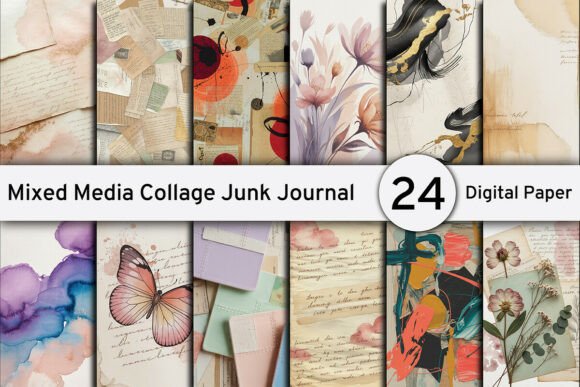
There is a specific kind of visual noise that stops a viewer in their tracks—layered, tactile, and rich with history. This is the essence of Mixed Media Collage Papers Backgrounds. We are moving away from the sterile, flat digital environments that dominated the last decade and embracing a design aesthetic that feels handmade and organic. This digital bundle is not just a collection of images; it is a toolkit for creating depth. By combining vintage ephemera, paint swashes, typography fragments, and grunge textures, these backgrounds offer a visual complexity that is difficult to achieve from scratch.
The "mixed media" aspect is crucial here. It implies a collision of different elements—perhaps a crisp serif font bleeding into a watercolor wash, or geometric shapes overlaid on distressed paper. This visual style resonates because it feels authentic. For a designer or crafter, using these backgrounds provides a sophisticated starting point. Instead of spending hours layering textures in Photoshop to achieve that "perfectly imperfect" look, you have a seamless foundation ready to build upon. The appeal lies in the personality of the paper; it tells a story before you even add your own text or imagery.
Visual Characteristics and The "Handmade" Appeal
When you look at high-quality Mixed Media Collage Papers Backgrounds, you notice the interplay of order and chaos. You might see architectural lines or vintage script (the "collage paper" element) disrupted by splatters of acrylic paint or charcoal smudges. This creates a dynamic visual hierarchy. The background is busy enough to be interesting but cohesive enough not to distract from foreground content. It provides that coveted "art journal" vibe—something that feels personal, curated, and deeply artistic.
For the modern creator, this style bridges the gap between digital precision and analog warmth. In a world saturated with vector-perfect graphics, a background that mimics the grain of actual paper or the bleed of ink adds a layer of trust and intimacy. It suggests that a human hand was involved in the process. Whether you are designing a planner cover, a social media graphic, or packaging for a small business, these textures inject soul into the project. The color palettes in these bundles are usually curated to ensure harmony, meaning the "chaos" of the collage is actually quite controlled and usable for professional applications.
Strategic Applications for Designers and Entrepreneurs
Understanding where to deploy these assets is key to maximizing their value. Mixed Media Collage Papers Backgrounds are incredibly versatile, fitting seamlessly into both digital and print ecosystems. Here is how different professionals can leverage them:
- Brand Identity and Packaging: For small businesses, particularly in the wellness, beauty, or artisanal food sectors, these backgrounds evoke an "indie" and authentic brand perception. Using a textured collage background on a business card or product label immediately signals quality and creativity. It moves a brand away from looking corporate and generic.
- Digital Marketing and Social Media: On platforms like Instagram or Pinterest, scroll-stopping power is everything. A Mixed Media background adds depth to quote graphics, sale announcements, or podcast covers. Because they are high-resolution (300 DPI), they look crisp on high-definition screens, ensuring your typography remains legible against the complex texture.
- Publishing and Editorial Design: If you are working on a magazine layout, a book cover, or a blog header, these textures serve as excellent grounding elements. They work particularly well for genres like poetry, creative non-fiction, or lifestyle content where the mood is as important as the message.
- Crafting and POD (Print on Demand): For the hobbyist or professional crafter, the utility is obvious. These files are perfect for scrapbooking, junk journaling, and creating custom stickers. The 12x16 inch size (3600x4800 pixels) offers plenty of resolution for large prints or wall art, ensuring no pixelation even when cropped.
Technical Specifications and Workflow Integration
While the aesthetic is "messy," your workflow needs to be clean. This bundle comes in JPG format, which is universally compatible with almost every design software on the market, from Adobe Illustrator and Canva to Procreate and Affinity Photo. The RGB color mode is optimized for digital display, ensuring vibrant colors on screens, though it is also suitable for modern digital printing methods like sublimation.
A practical tip for working with these backgrounds is to treat them as a "base layer" rather than the final product. Because they are seamless, you can tile them for larger projects, but the real magic happens when you adjust the opacity or blend modes. For instance, setting your text layer to "Multiply" or "Overlay" can make your typography look like it was printed directly onto the paper texture. This creates a cohesive visual identity where the text and background feel like a single unit. Always test your foreground elements against the background; if the collage is too busy, consider adding a semi-transparent shape or a "knockout" area where your text can sit cleanly.
Evaluating Fit and Maintaining Professionalism
Not every project calls for a textured, grunge aesthetic. When evaluating if Mixed Media Collage Papers Backgrounds are right for your project, consider your audience and the message. If you are designing for a high-tech SaaS company, this style might feel out of place. However, if you are targeting an audience that values creativity, DIY culture, or artistic expression, these assets are gold.
One common mistake is over-cluttering. Just because the background is detailed doesn't mean your foreground needs to be. Use strong, bold typography—whether it is a modern sans-serif or a clean serif font—to contrast against the organic shapes of the collage. This contrast is what creates a professional hierarchy. The background provides the "vibe," and your typography provides the information. By maintaining this balance, you ensure that your designs look intentional and polished, rather than chaotic. These assets are an investment in efficiency, allowing you to produce high-end, gallery-worthy designs without the steep learning curve of creating complex textures from scratch.